When people in the UK think of wildlife crime, they think of such issues as the poaching of tigers and elephants in Africa. But this is sadly far from the truth; wildlife crime can happen right in your neighbourhood. It can take many forms, including habitat destruction, illegal hunting, animal cruelty, and taking eggs from nesting birds. Additionally, it involves the importing and exporting of wildlife and the release of non-native species. ‘The State of Nature’ report from 2023 revealed that, among the UK species studied, there has been an overall decline of 19 percent since the 1970s. The main causes of this decline are climate change, intensive farming practices, and habitat loss. The persecution of wildlife presents another threat to Britain’s rich biodiversity, making it even more vulnerable.
When people in the UK think of wildlife crime, they think of such issues as the poaching of tigers and elephants in Africa. But this is sadly far from the truth; wildlife crime can happen right in your neighbourhood.
Wildlife Crime- England & Wales
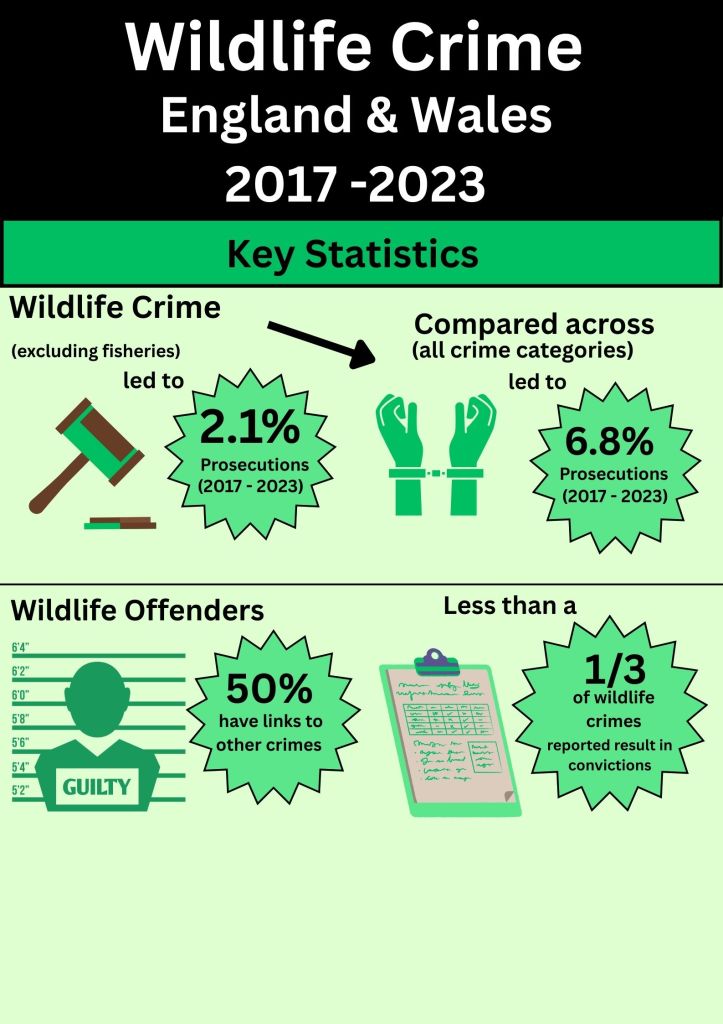
The latest statistics from the Countryside & Wildlife Link report, ‘Wildlife crime no minor offence’, published in 2024, highlight the main factors driving this crime. Wildlife crime resulted in far fewer prosecutions compared to other offenses. In England and Wales, 10,244 wildlife crimes were committed between 2017 and 2023. Leading to 216 prosecutions, which is a rate of 2.1 percent. Throughout England and Wales in 2023, a record 6,200 crimes were committed across all categories, with a conviction rate of 6.8.
Furthermore, John Armstrong of the Forensic Capability Network explains,
‘If you compare it to other crimes, like domestic violence or armed robbery or burglary, there’s loads of statistics around how many burglaries are committed every day, etc.’
The Wildlife and Countryside Link states in their report, unlike other crimes, wildlife crime is not notifiable, and the police will record incidents locally. This data does not filter into a regional or national database. Therefore, nobody knows the exact number of wildlife crimes committed, as the Home Office does not collect data. Armstrong believes one of the reasons this crime is under-reported because the way it’s defined,
‘I think that’s why, in the police service, it’s often referred to now as animal-related crime rather than wildlife crime. To try and emphasise those links to other crimes that are not just related to the injury or the abuse of an animal.’
‘I think that’s why, in the police service, it’s often referred to now as animal-related crime rather than wildlife crime. To try and emphasise those links to other crimes that are not just related to the injury or the abuse of an animal.’
This clearly makes more sense as an animal-related crime has a definition. The Wildlife and Countryside report reveals data from the International Fund for Animal Welfare (IFAW), which stated that 50 percent of wildlife offenders had links to other crimes, including firearms and violent crimes. The police services involved used DASH (Domestic Abuse, Stalking, Honour-Based Violence Risk Identification, Assessment Model). This method allows the police forces to question an individual about the mistreatment of animals as a sign of violence toward women. It is only possible if perpetrators are brought to justice.
‘There’s rarely CCTV in some of these locations where this might happen. And forensic evidence can be recovered in certain circumstances. But again, the offence has to be reported, or the incident has to be reported fairly quickly.’,
, Says Armstrong. Geoffrey Edmond, RSPCA Lead Wildlife Officer, agrees,
‘The difficulty we have, and we work collaboratively with the police is, sadly, often the RSPCA attend or the police may attend to find an animal in a horrendous state, sometimes having been killed, but without knowing who has done that.’
The Wildlife and Countryside report reveals data from the International Fund for Animal Welfare (IFAW), which stated that 50 percent of wildlife offenders had links to other crimes, including firearms and violent crimes.
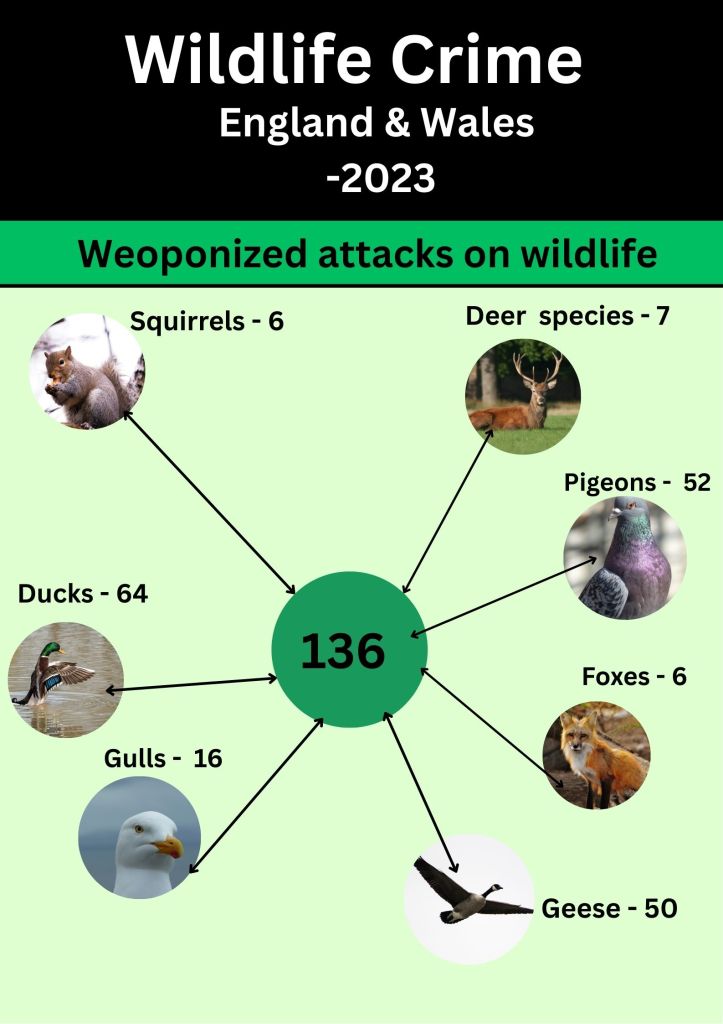
RSPCA statistics on weaponised attacks on wild animals are revealed in the Countryside and Wildlife Link report. In 2023, there were 136 weaponised attacks on 370 animals. A range of weapons was used, including slingshots, crossbows, air guns, and catapults. This data does not consider animals that had succumbed to their injuries; therefore, the statistics would be significantly higher. The most common species to be attacked were bird species, with 214 out of 370 wild animals and 20 wild mammals. As stated in the figures:
Birds
Ducks (64), Pigeons (52), Geese (50), Gulls (16)
Mammals
Grey Squirrels (6) , Deer species (7), Foxes (5)
However, UK wildlife is protected under several laws, which include the Wildlife and Countryside Act (1981) and the Animal Welfare Act (2006), which was recently updated in June 2021. Edmond explains,
‘And both these acts of legislation carry serious penalties for anyone taking an animal from the wild, injuring it, killing it, or causing it to suffer, which we’re often seeing far too often in these instances.’
The Animal Welfare Act now enforces much harsher sentences, stating that a person can be incarcerated for up to five years and face an unlimited fine. According to the gov.uk in April 2021, RSPCA Chief Executive, Chris Sherwood, said,
‘This law is a huge step forward for animal welfare in the UK, and we’re delighted that justice will now be served for animals.’
The Wildlife and Countryside Act (1981) is dependent on the type of offence that is committed because it covers a wide range of crimes, which include badger baiting, hare coursing, and bat persecution. In most circumstances, a summary conviction will result in penalties of up to six months’ imprisonment, a fine of £5,000, or both. Section 14 of this act states that, depending on the nature of the crime being committed, it can lead to a conviction on indictment of a defendant. Resulting in either an unlimited fine and/or up to two years in prison, also face a life ban from owning animals and forfeiting weapons and vehicles. Despite there being laws in place to safeguard British wildlife, the reporting of wild animal-related crimes and convictions is considerably low, with less than a third leading to prosecutions, according to the WCL report in 2023.
‘And both these acts of legislation carry serious penalties for anyone taking an animal from the wild, injuring it, killing it, or causing it to suffer, which we’re often seeing far too often in these instances.’
Wildlife-related crime in England and Wales does not have a sentencing structure that is befitting of this horrendous crime. Currently, the lack of guidelines in this area means judges often tend to go ahead with what are called lower-level sanctions, according to Wildlife and Countryside Link. The outcome of wild animal-related crimes results in a low fine, and it is rare for a group or an individual involved to receive a custodial sentence.
Armstrong believes the best way to tackle this crime is by having greater educational awareness,
‘It’s all about awareness, isn’t it, and the importance of it. In some parts of society, maybe it’s not considered important enough, this type of offence or this type of crime. And the only way you improve that is to increase people’s awareness and education about what the issues are and the ramifications.’
On the 9th of July 2021, Christopher Barker, 45, from Brompton-By- Saward, North Yorkshire, was seen driving his speed boat, disturbing a pod of bottlenose dolphins feeding near the shore of Scarborough’s South Bay.
This led to an investigation by North Yorkshire Police resulted in Barker being charged with the intention of or carelessly disturbing a dolphin which is an offense under the Wildlife and Countryside Act 1981. Barker pleaded guilty on the 9th of June 2022 and subsequently had to pay a two-hundred-pound fine plus a victim surcharge fee and prosecution costs bringing the overall total to three hundred and four pounds.
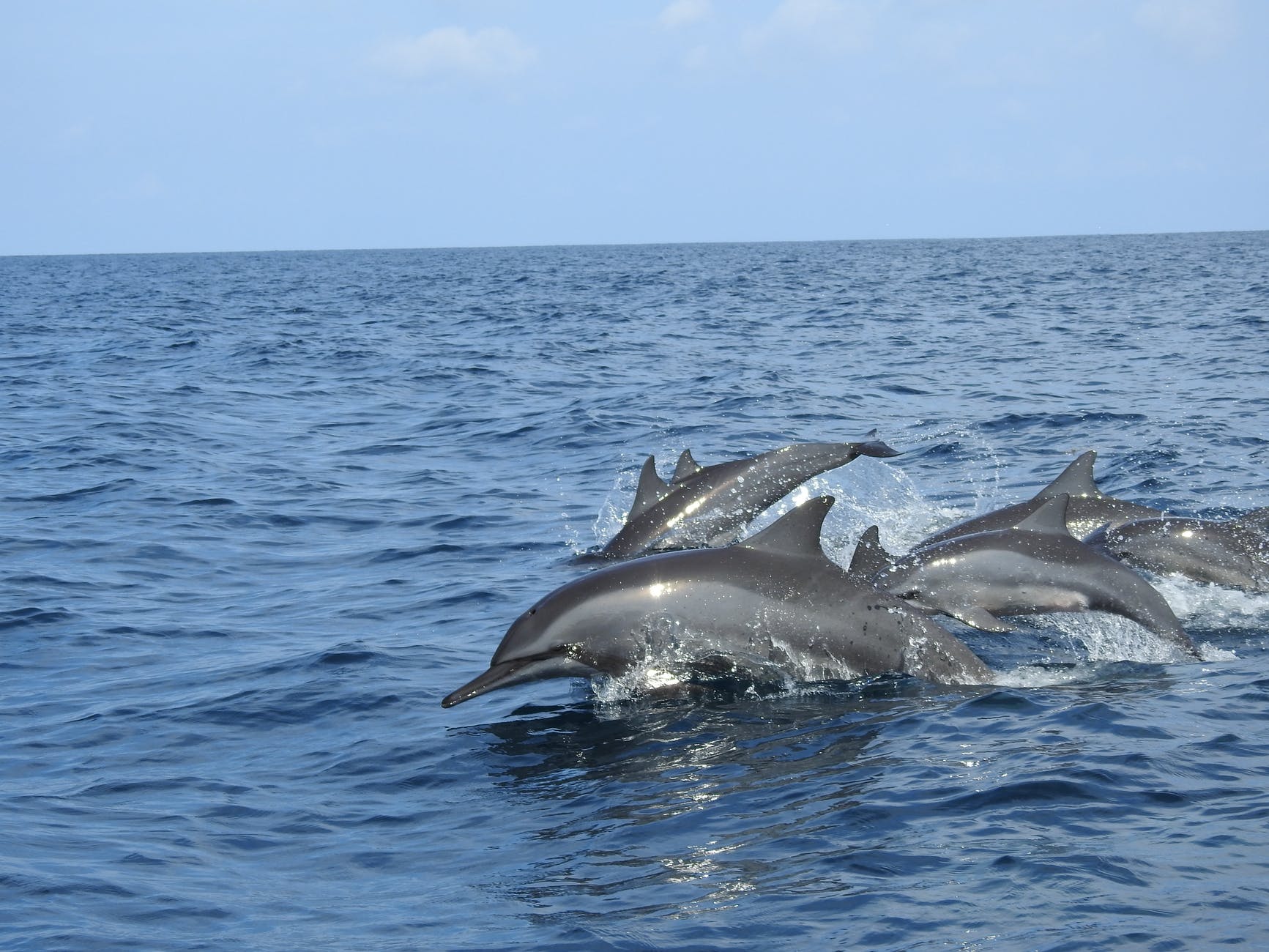
Image descripton – A pod of bottlenose dolphins diving in and out of the waves – Photo by Pexels User on Pexels.com
“Dolphins are an intelligent, social species, often living in large communal groups. Over recent years sightings of dolphins off the Yorkshire coast have increased dramatically, proving popular with locals and tourists alike. But this has also led to an increased risk of human interference”, said, PC Graham Bilton, Wildlife Crime Officer for North Yorkshire Police, who investigated the case.
In addition, Bilton added;
“Cetaceans such as whales, dolphins, and porpoises are especially susceptible to disturbance, both physically and acoustically, and are legally protected here in the UK.
I urge all boat and watercraft operators to act responsibly and respect the marine environment. We are extremely lucky in North Yorkshire to have such diverse wildlife. It’s important that we enjoy, protect, and live alongside it.
North Yorkshire Police is committed to investigating offences which have a detrimental effect on our wildlife, and I hope that this prosecution underlines that message.”
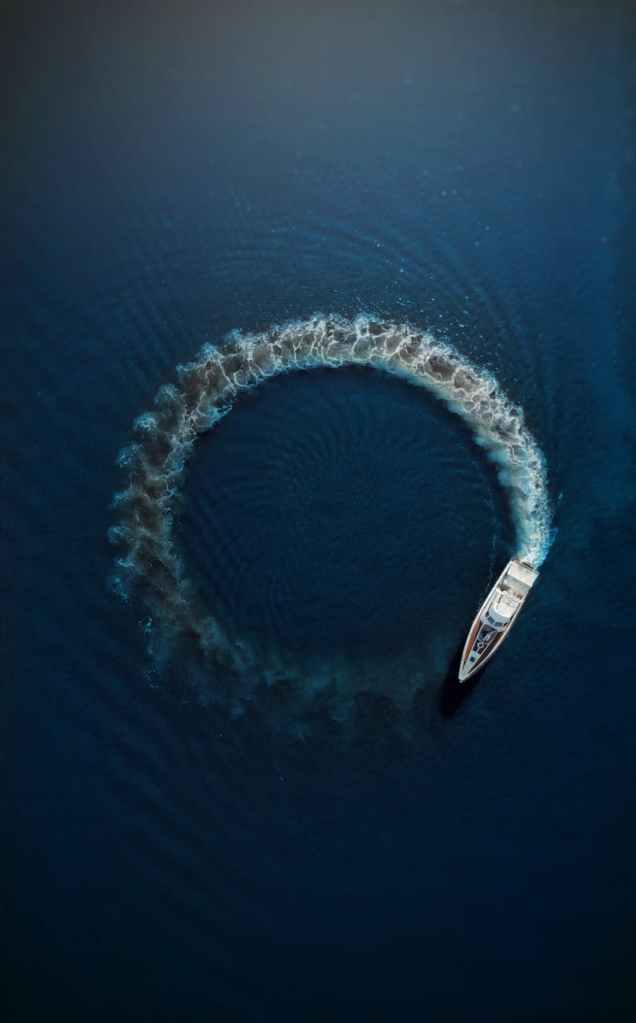
Image Description – A speedboat circling in the sea – Photo by Sanndy Anghan on Pexels.com
Working in collaboration with North Yorkshire Police were other agencies including, RSPCA Operation Seabird, and the Crown Prosecution Service. Enabled a successful partnership that achieved the desired result for all involved.
Geoff Edmond, RSPCA Inspectorate National Wildlife Coordinator, said,
“This was clearly unacceptable behaviour, and combined determination to investigate the dolphin disturbance, in this case, has been achieved with the help from the members of the public who witnessed this incident and who were themselves very concerned about what they saw taking place.”
The successful outcome in North Yorkshire, however, is not something that has been reflected throughout England and Wales. In New Quay Bay, West Wales within Cardigan Bay Special Area of Conservation, the bottlenose dolphin population are under considerable threat from speed/motorboats. Research revealed earlier this year that eighteen to twenty-nine percent of recreational vessels have been ignoring the voluntary code of conduct in place to protect marine mammals. The impact of boat traffic on bottlenose dolphins can include death, injury, breeding success, and behaviour changes, for instance, increasing diving intervals.
Historically this case is significantly important because it is the first time that someone has been prosecuted for distressing dolphins. It sets a positive precedent and deterrent.
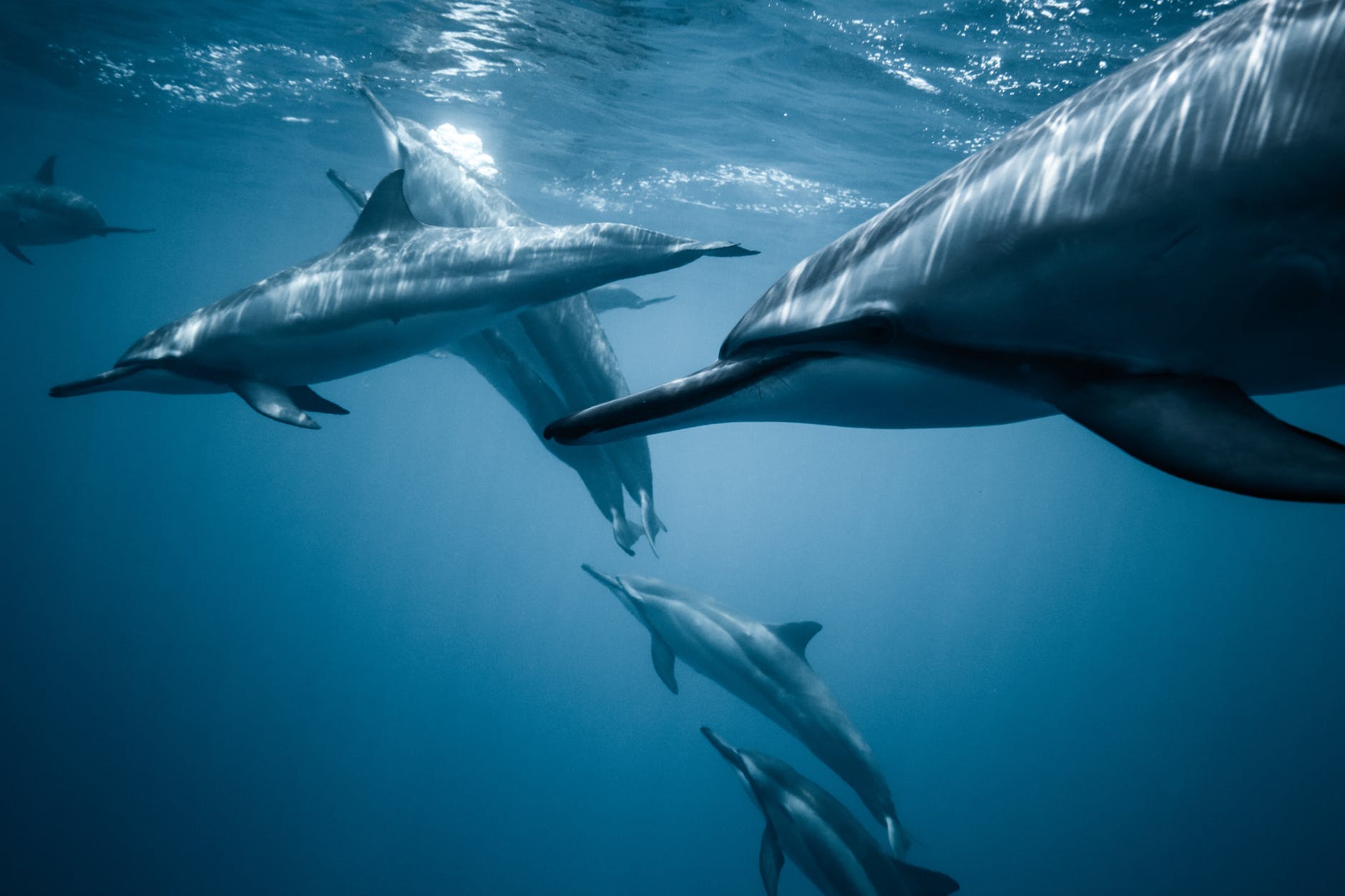
Image Description – Bottlenose dolphin pod Photo by Jeremy Bishop on Pexels.com



 THE UNTAMED BEAST