When people in the UK think of wildlife crime, they think of such issues as the poaching of tigers and elephants in Africa. But this is sadly far from the truth; wildlife crime can happen right in your neighbourhood. It can take many forms, including habitat destruction, illegal hunting, animal cruelty, and taking eggs from nesting birds. Additionally, it involves the importing and exporting of wildlife and the release of non-native species. ‘The State of Nature’ report from 2023 revealed that, among the UK species studied, there has been an overall decline of 19 percent since the 1970s. The main causes of this decline are climate change, intensive farming practices, and habitat loss. The persecution of wildlife presents another threat to Britain’s rich biodiversity, making it even more vulnerable.
When people in the UK think of wildlife crime, they think of such issues as the poaching of tigers and elephants in Africa. But this is sadly far from the truth; wildlife crime can happen right in your neighbourhood.
Wildlife Crime- England & Wales
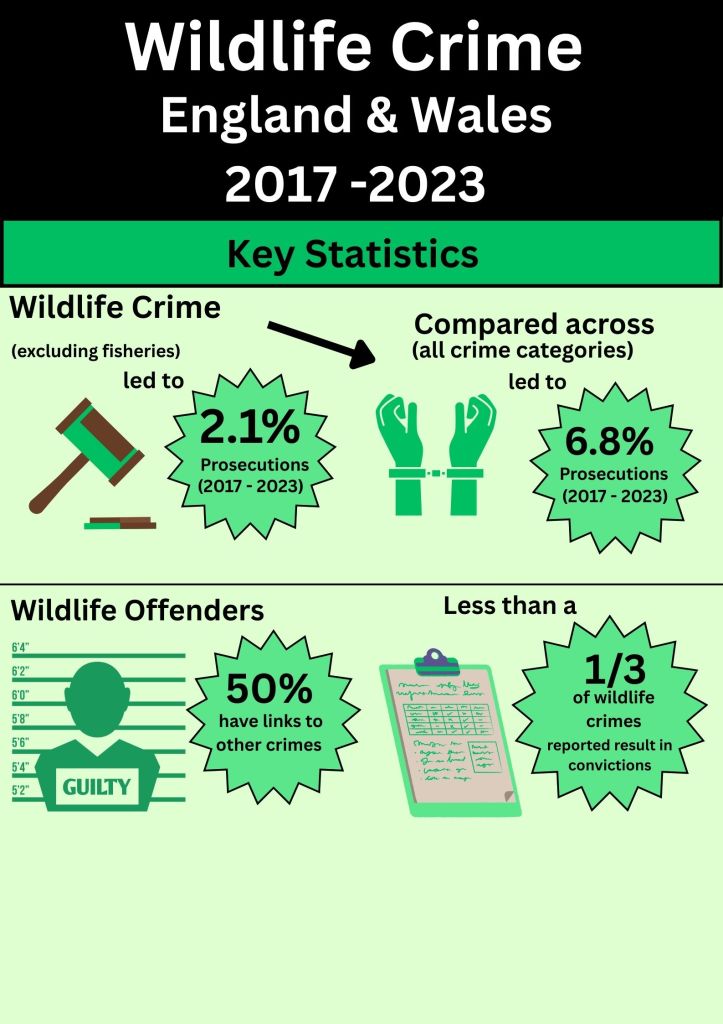
The latest statistics from the Countryside & Wildlife Link report, ‘Wildlife crime no minor offence’, published in 2024, highlight the main factors driving this crime. Wildlife crime resulted in far fewer prosecutions compared to other offenses. In England and Wales, 10,244 wildlife crimes were committed between 2017 and 2023. Leading to 216 prosecutions, which is a rate of 2.1 percent. Throughout England and Wales in 2023, a record 6,200 crimes were committed across all categories, with a conviction rate of 6.8.
Furthermore, John Armstrong of the Forensic Capability Network explains,
‘If you compare it to other crimes, like domestic violence or armed robbery or burglary, there’s loads of statistics around how many burglaries are committed every day, etc.’
The Wildlife and Countryside Link states in their report, unlike other crimes, wildlife crime is not notifiable, and the police will record incidents locally. This data does not filter into a regional or national database. Therefore, nobody knows the exact number of wildlife crimes committed, as the Home Office does not collect data. Armstrong believes one of the reasons this crime is under-reported because the way it’s defined,
‘I think that’s why, in the police service, it’s often referred to now as animal-related crime rather than wildlife crime. To try and emphasise those links to other crimes that are not just related to the injury or the abuse of an animal.’
‘I think that’s why, in the police service, it’s often referred to now as animal-related crime rather than wildlife crime. To try and emphasise those links to other crimes that are not just related to the injury or the abuse of an animal.’
This clearly makes more sense as an animal-related crime has a definition. The Wildlife and Countryside report reveals data from the International Fund for Animal Welfare (IFAW), which stated that 50 percent of wildlife offenders had links to other crimes, including firearms and violent crimes. The police services involved used DASH (Domestic Abuse, Stalking, Honour-Based Violence Risk Identification, Assessment Model). This method allows the police forces to question an individual about the mistreatment of animals as a sign of violence toward women. It is only possible if perpetrators are brought to justice.
‘There’s rarely CCTV in some of these locations where this might happen. And forensic evidence can be recovered in certain circumstances. But again, the offence has to be reported, or the incident has to be reported fairly quickly.’,
, Says Armstrong. Geoffrey Edmond, RSPCA Lead Wildlife Officer, agrees,
‘The difficulty we have, and we work collaboratively with the police is, sadly, often the RSPCA attend or the police may attend to find an animal in a horrendous state, sometimes having been killed, but without knowing who has done that.’
The Wildlife and Countryside report reveals data from the International Fund for Animal Welfare (IFAW), which stated that 50 percent of wildlife offenders had links to other crimes, including firearms and violent crimes.
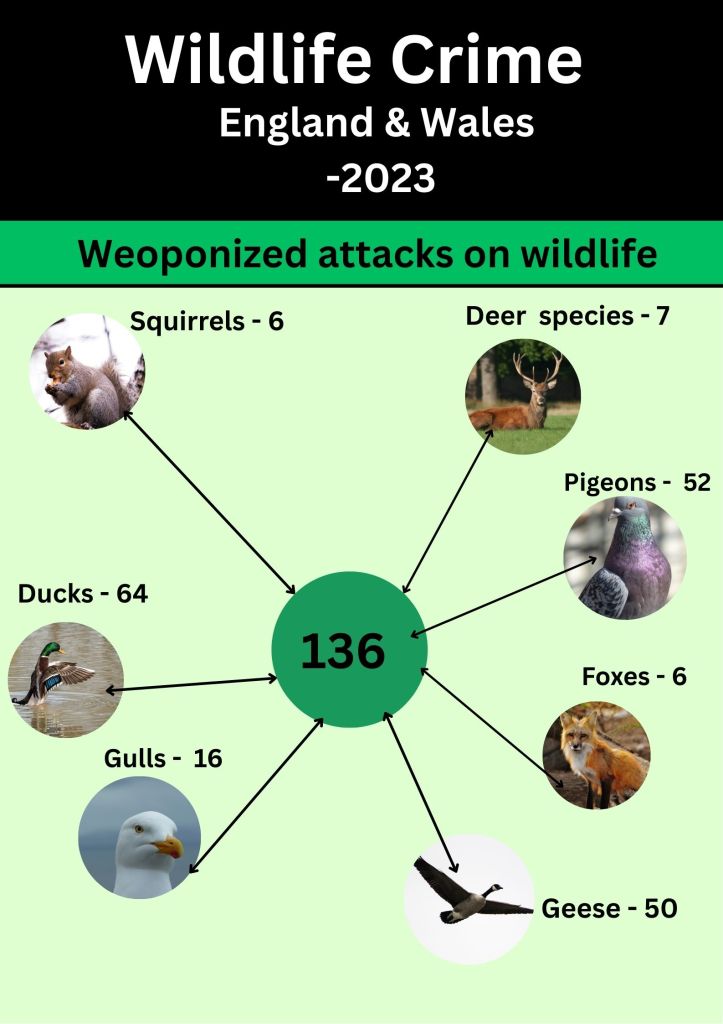
RSPCA statistics on weaponised attacks on wild animals are revealed in the Countryside and Wildlife Link report. In 2023, there were 136 weaponised attacks on 370 animals. A range of weapons was used, including slingshots, crossbows, air guns, and catapults. This data does not consider animals that had succumbed to their injuries; therefore, the statistics would be significantly higher. The most common species to be attacked were bird species, with 214 out of 370 wild animals and 20 wild mammals. As stated in the figures:
Birds
Ducks (64), Pigeons (52), Geese (50), Gulls (16)
Mammals
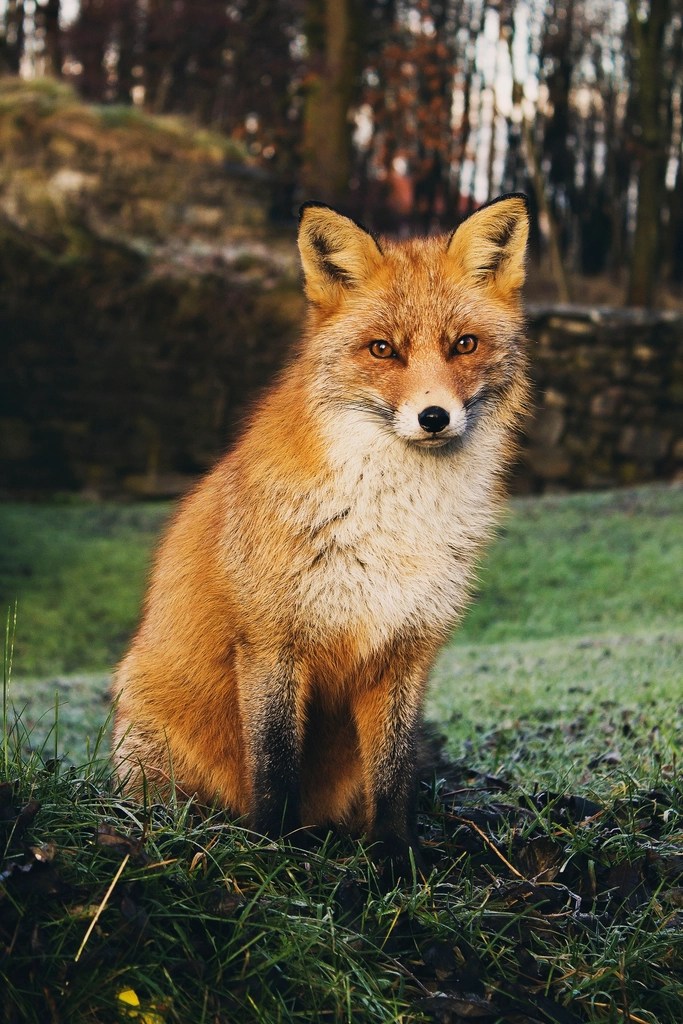
Grey Squirrels (6) , Deer species (7), Foxes (5)
However, UK wildlife is protected under several laws, which include the Wildlife and Countryside Act (1981) and the Animal Welfare Act (2006), which was recently updated in June 2021. Edmond explains,
‘And both these acts of legislation carry serious penalties for anyone taking an animal from the wild, injuring it, killing it, or causing it to suffer, which we’re often seeing far too often in these instances.’
The Animal Welfare Act now enforces much harsher sentences, stating that a person can be incarcerated for up to five years and face an unlimited fine. According to the gov.uk in April 2021, RSPCA Chief Executive, Chris Sherwood, said,
‘This law is a huge step forward for animal welfare in the UK, and we’re delighted that justice will now be served for animals.’
The Wildlife and Countryside Act (1981) is dependent on the type of offence that is committed because it covers a wide range of crimes, which include badger baiting, hare coursing, and bat persecution. In most circumstances, a summary conviction will result in penalties of up to six months’ imprisonment, a fine of £5,000, or both. Section 14 of this act states that, depending on the nature of the crime being committed, it can lead to a conviction on indictment of a defendant. Resulting in either an unlimited fine and/or up to two years in prison, also face a life ban from owning animals and forfeiting weapons and vehicles. Despite there being laws in place to safeguard British wildlife, the reporting of wild animal-related crimes and convictions is considerably low, with less than a third leading to prosecutions, according to the WCL report in 2023.
‘And both these acts of legislation carry serious penalties for anyone taking an animal from the wild, injuring it, killing it, or causing it to suffer, which we’re often seeing far too often in these instances.’
Wildlife-related crime in England and Wales does not have a sentencing structure that is befitting of this horrendous crime. Currently, the lack of guidelines in this area means judges often tend to go ahead with what are called lower-level sanctions, according to Wildlife and Countryside Link. The outcome of wild animal-related crimes results in a low fine, and it is rare for a group or an individual involved to receive a custodial sentence.
Armstrong believes the best way to tackle this crime is by having greater educational awareness,
‘It’s all about awareness, isn’t it, and the importance of it. In some parts of society, maybe it’s not considered important enough, this type of offence or this type of crime. And the only way you improve that is to increase people’s awareness and education about what the issues are and the ramifications.’
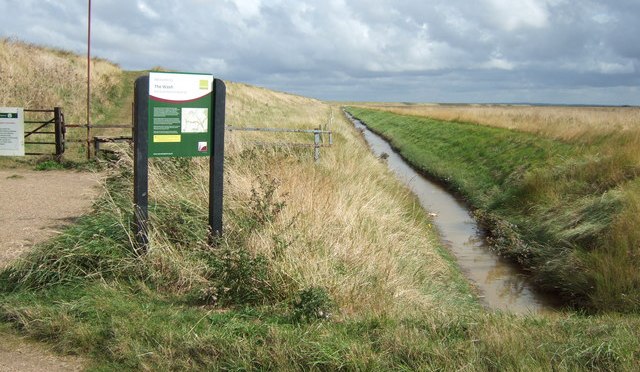
Plans have been put forward on The Wash in East Anglia to build an ‘unworkable’ tidal barrage regardless of the damage it could cause. The estuary would be redeveloped to produce electricity, which will cost nearly double per MWh compared to any modest carbon energy source and have a major impact on one UK’s most important wetlands.
The RSPB, alongside the Norfolk Wildlife Trust, Lincolnshire Wildlife Trust, the Wildfowl and Wetland Trust, and Wild Ken Hill Estate have joined forces to ask the government and developers to reassess this proposal and to avoid devastating impact on the habitat and wildlife.
The Wash estuary is home to several species, including England’s largest common seal population, and salt marshes which are feeding grounds for curlews and oystercatchers. Building a tidal barrage would essentially modify the intertidal habitats that animals rely on. A barrier would be erected across The Wash’s mouth, altering the tidal flow both in and out of the estuary and might lead to more flooding and substantial coastal erosion.
Businessman, James Sutcliffe, CEO of Centre Port Holdings Ltd, is managing the plans, which now include a deep-water port. Construing a deep-water port in the shallow waters of the Wash could be challenging because intense dredging would need to be maintained. Currently, it’s not clear what impact this would have on the ports of Boston and King’s Lynn.
Centre Port Holdings Ltd, is planning to bring about a major source of tidal energy to 600,000 homes and businesses, creating local job opportunities such as multi-skilled apprenticeships and working with schools and universities, levelling up the coastal towns of Boston, Skegness, Kings Lynn, and Wisbech. Additionally, major flood defences are going to be built to ensure the Wash’s nature reserves and wildlife areas do not disappear. This could happen within two generations.
“It’s absolutely necessary to look at where the UK sources its energy and how we produce more of it ourselves from renewable sources, but we have to make sure we’re striking the right balance for nature.
“The Wash is one of the most complex coastal habitats, known for its hydrology and stunning range of wildlife. Spending millions of pounds on assessments and surveys is a waste of time and money that could be better spent on more workable, established solutions to generate green energy, such as wind and solar power.”
Adding,
“Based on the current evidence that demonstrates the destruction this would bring to The Wash, we consider this project a non-starter.”
At a time when the UK is reconsidering its energy strategy and moving towards green alternatives, the balance between protecting nature and addressing the climate crisis is likely to become more complex in the future.
Image Description: Electric car green and white car being charged. Photo by Mike B on Pexels.com
Shropshire motorists who are already using electric and hybrid vehicles will be gaining on-street electric vehicle charging points in their hometowns. A successful bid for Government funding has enabled Shropshire Council to invest nearly £1000,000 in more on-the-street charging points.
Ian Nellins, Shropshire Council’s Cabinet member for climate change, environment, and transport says, “We’re committed to improving and developing infrastructure to enable residents and businesses to lead more sustainable and self-sufficient lives, which in turn helps reduce the impacts of climate change on our environment. Providing more electric vehicle charging points that are accessible to all motorists is just one of the ways we are delivering on this priority.”
Adding, “This is one of the biggest awards to have been made to any council under the on-street residential charging points scheme from the Office of Zero Emission Vehicles, and it means we can add 270 more charge points to our streets and car parks to benefit the growing number of hybrid and EV owners in the county.”
“This is one of the biggest awards to have been made to any council under the on-street residential charging points scheme from the Office of Zero Emission Vehicles“
The Office for Zero Emissions, with support from the Energy Saving Trust, has been awarded £902,940 to install the on-street charging points in Shropshire. The county is currently ranked sixty-five out of three hundred and seventy-five local authorities for its number of charge points. This new development will boost Shropshire to eleventh place, within the top three percent nationally.
Shropshire Council is expecting to add four to twelve charging points in each of seventeen chosen areas:
Albrighton – Crown Hotel and High Street
Bridgnorth – Innage Lane and Listley Street North
Broseley – Bridgnorth Road and Dark Lane
Church Stretton – 6 Essex Road and Easthope 1-4
Cleobury Mortimer – Childe Road East, Childe Road West and St Mary’s Lane
Clun – High Street
Gobowen – Railway Station
Highley – High Street, 25 Woodhill Road
Ludlow – Galdeford Zone A, Corve Street and Broad Street
Market Drayton – Frogmore Road
Much Wenlock – Falcons Court
Oswestry – Edward Street, Wats Drive and Lloyd Street
Prees – Church Street
Shifnal – Aston Street, 56 Broadway and Victoria Road
Shrewsbury – Bainbridge Green, 131 Copthorne Road, 93 New Park Road, 79 Bishop Street, and Abbey Foregate
Wem – Aston Street and Mill Street
Whitchurch – Castle Hill, Newtown, Sherrymill Hill, St John’s Street and George Street
Ian Nellins says, “The locations have been chosen using insight from data which predicts the locations of early adopters of technology in residential areas where properties have little / no off-street parking. The installation is intended to give them confidence in their ability to access chargers when and where they need them”.
At a time when drivers are considering alternative forms of energy, this news is welcome and will eventually enable more Shropshire residents to make the switch.
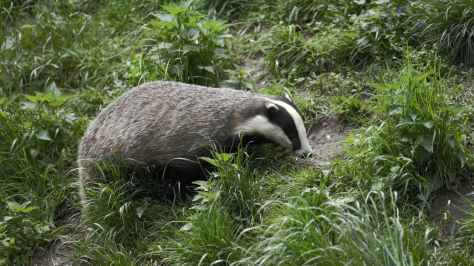
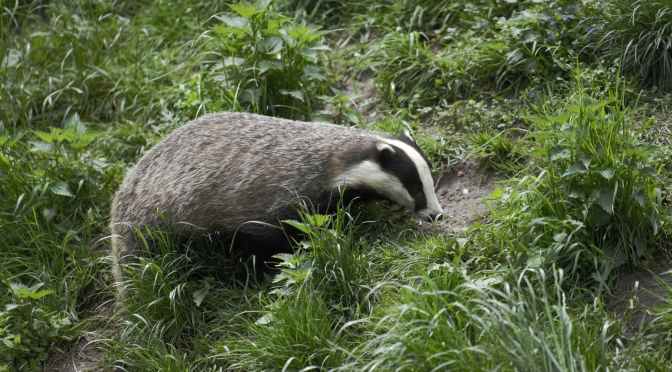
Image description – badger wondering through the grass – Photo by Leo Sam on Pexels.com
There is good news for Scottish badgers as a recent case has resulted in a higher sentence being given to a former gamekeeper, Rhys Davies, who was involved in badger baiting at the Millden Estate in Scotland. Davies, from Gwynedd, North Wales, received a sentence of eight months imprisonment and was ordered to pay a fine of £1,800. The Milden Estate has indicated that they were not aware of Davies’s crimes.
The horrific crimes Davies committed toward wildlife were further exposed when he tried to get professionally printed photographs of his ‘trophies’ and was subsequently arrested. A photo lab technician reported Davies to SSPCA having viewed one of his images, which showed both a badger and a dog fighting.
When the police raided Davies’s estate cottage in October 2019, the degree of animal abuse that had taken place was revealed. Dogs were found with hideous injuries and kept in squalid conditions, whilst the inside was scattered with dead wildlife and unsecured firearms. Veterinarians later stated that dogs had substantial injuries from regular fights with badgers. The dogs had facial and bodily mutilation where they had been treated with DIY treatments, which included using unapproved medicines and staple guns to avoid him contact with vets, who would have reported him for animal offenses.
The dogs had facial and bodily mutilation where they had been treated with DIY treatments, which included using unapproved medicines and staple guns
The sentence Davies has received is one of the heaviest ever imposed for organised badger baiting. This crime was prosecuted under the Animal Health and Welfare (Scotland) Act, 2006, because of the seriousness of the dogs’ injuries. The legislation was updated in 2020, with a potential increase in the sentencing of up to five years and unlimited fines. Davies received eight months imprisonment and a fine of £1,800.
“A custodial sentence sends a clear message to anyone who wants to use dogs to bait and maim wildlife – they will be punished for it.”, says, SSPCA Chief Supt, Mike Flynn.
This crime has highlighted that the Badger Protection Act 1992 is not always effective in its primary purpose to protect badgers from being persecuted. Therefore, the Badger Trust is campaigning for the law to be strengthened in line with Animal Welfare and the (sentencing) Act, 2021. An offender would receive a maximum sentence of five years for abusing a badger as they would if it’s a dog.
Image description: The Badger Trust- poster showing a divided photo with a badger on the left and on the right a terrier dog which is black and white and their noses are joined together. On the left side in white text on a black background it says, MAKE BLACK AND WHITE PROTECT BOTH. A white strip at the bottom which says Protection of Badgers Act -30 and underneath #StopBadgerCrime
Currently, wildlife crimes such as the persecution of badgers are not notifiable to the Home Office. As wildlife is not recorded in this way, there are no official national statistics. Increasing sentencing would by default make a crime under the Badger Protection Act a notifiable offence.
To find out more information about the Badger Trust click here







 THE UNTAMED BEAST